Macedonia in the Hellenic Parliament, 1897–1989
Presentation of the collective volume by the Hellenic Parliament Foundation and the Museum of the Macedonian Struggle at the 53rd Book Festival
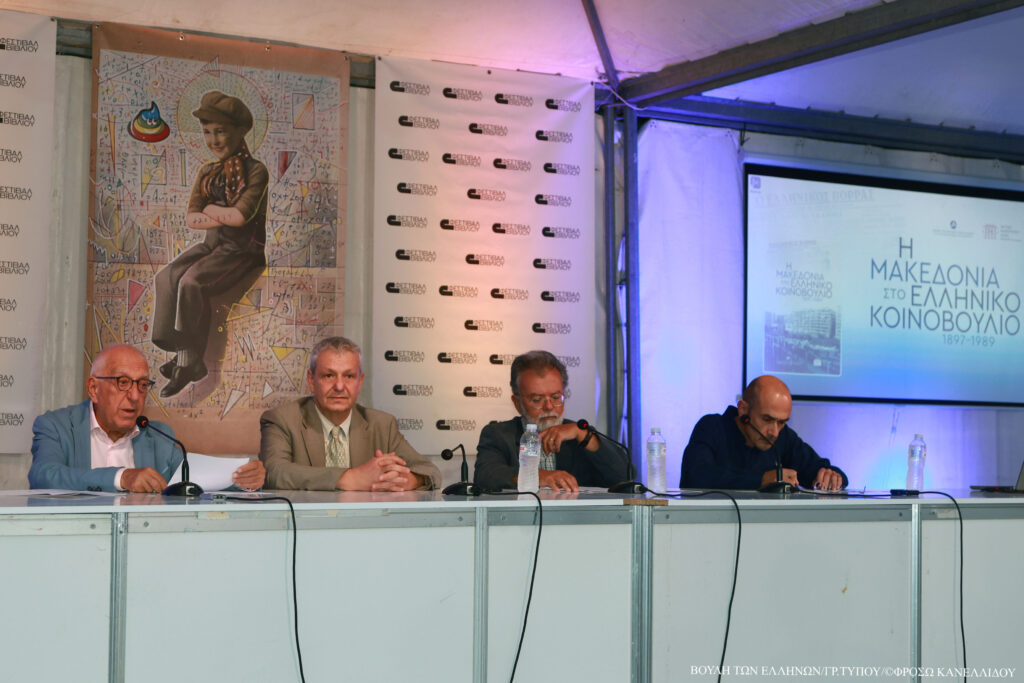
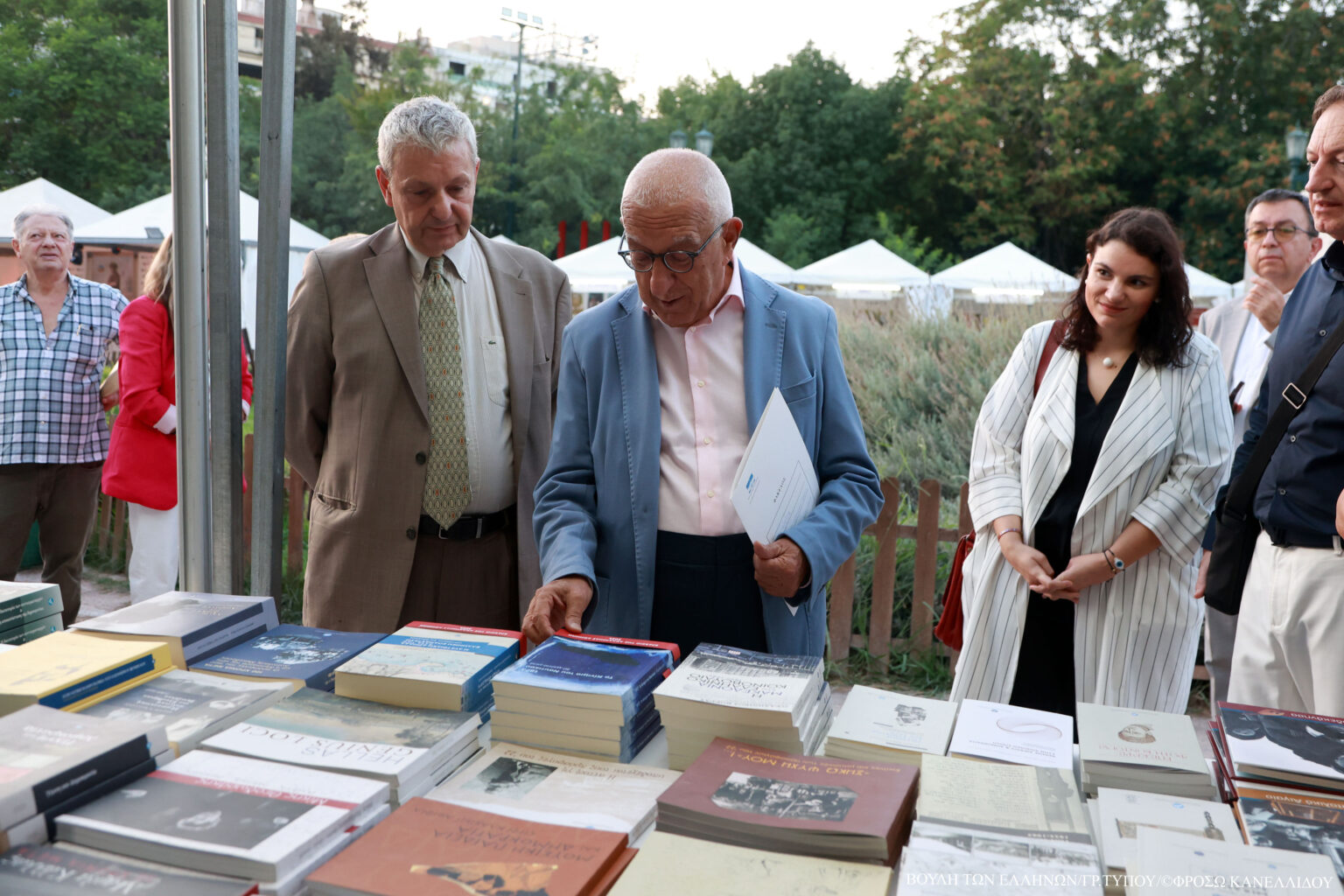
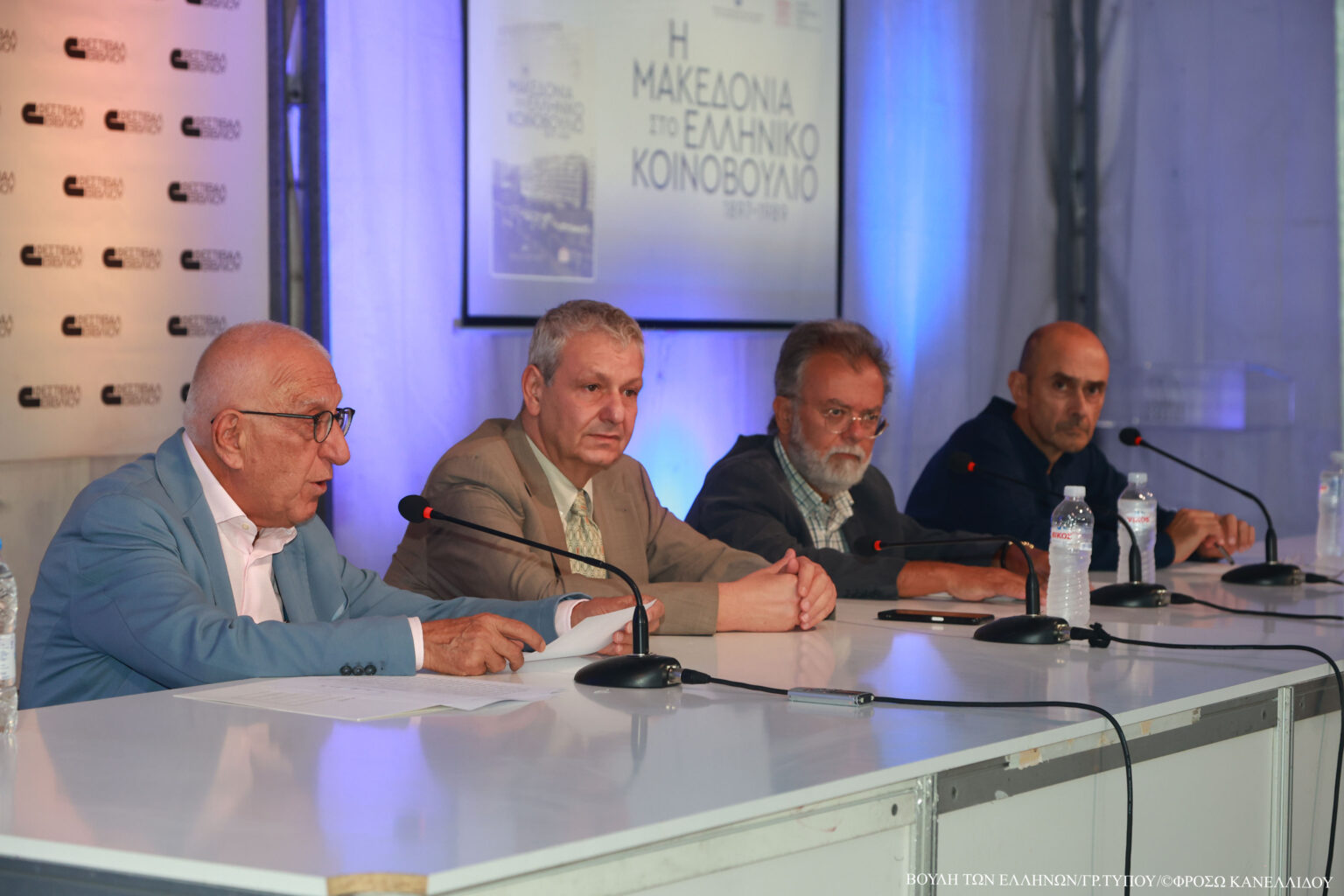
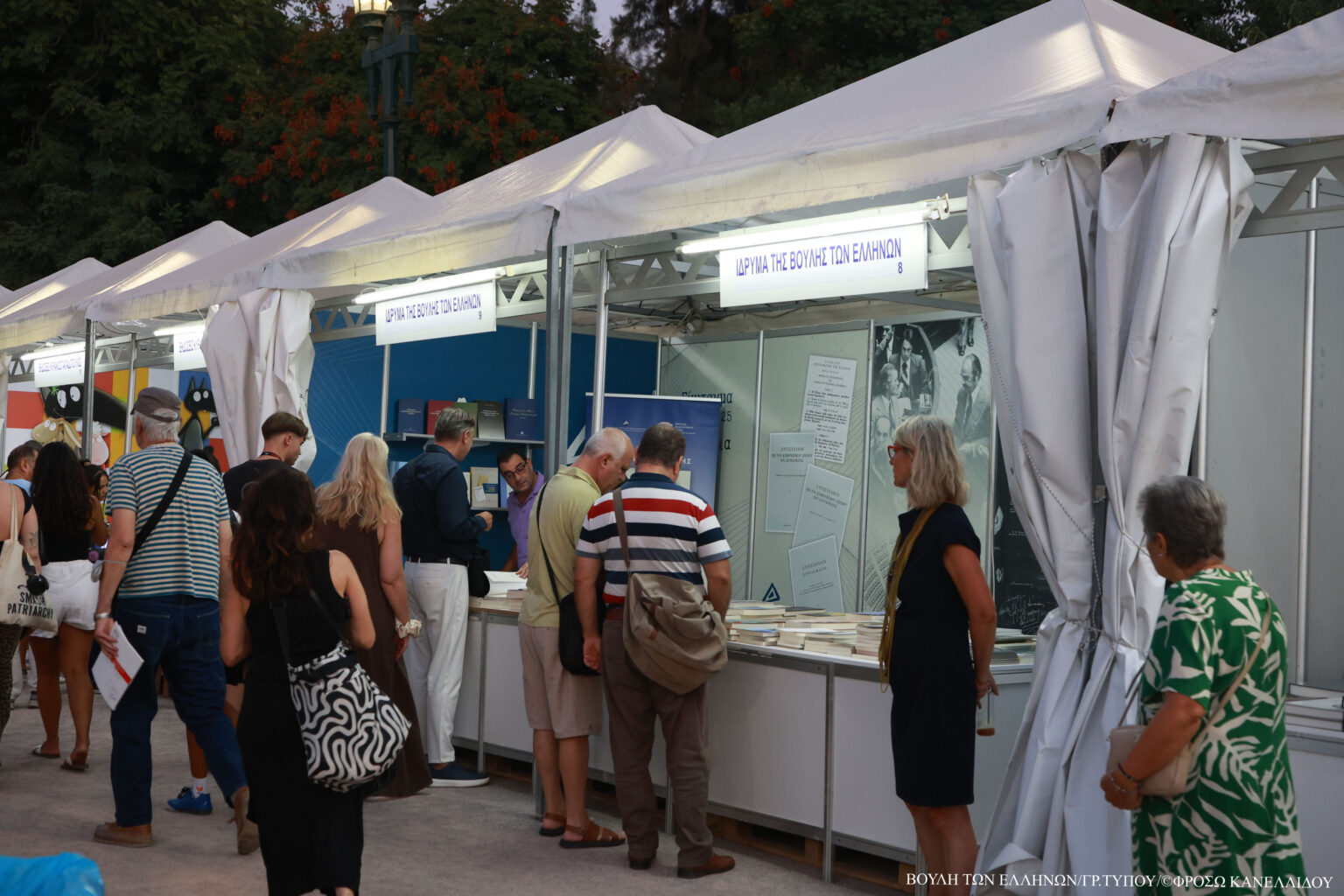
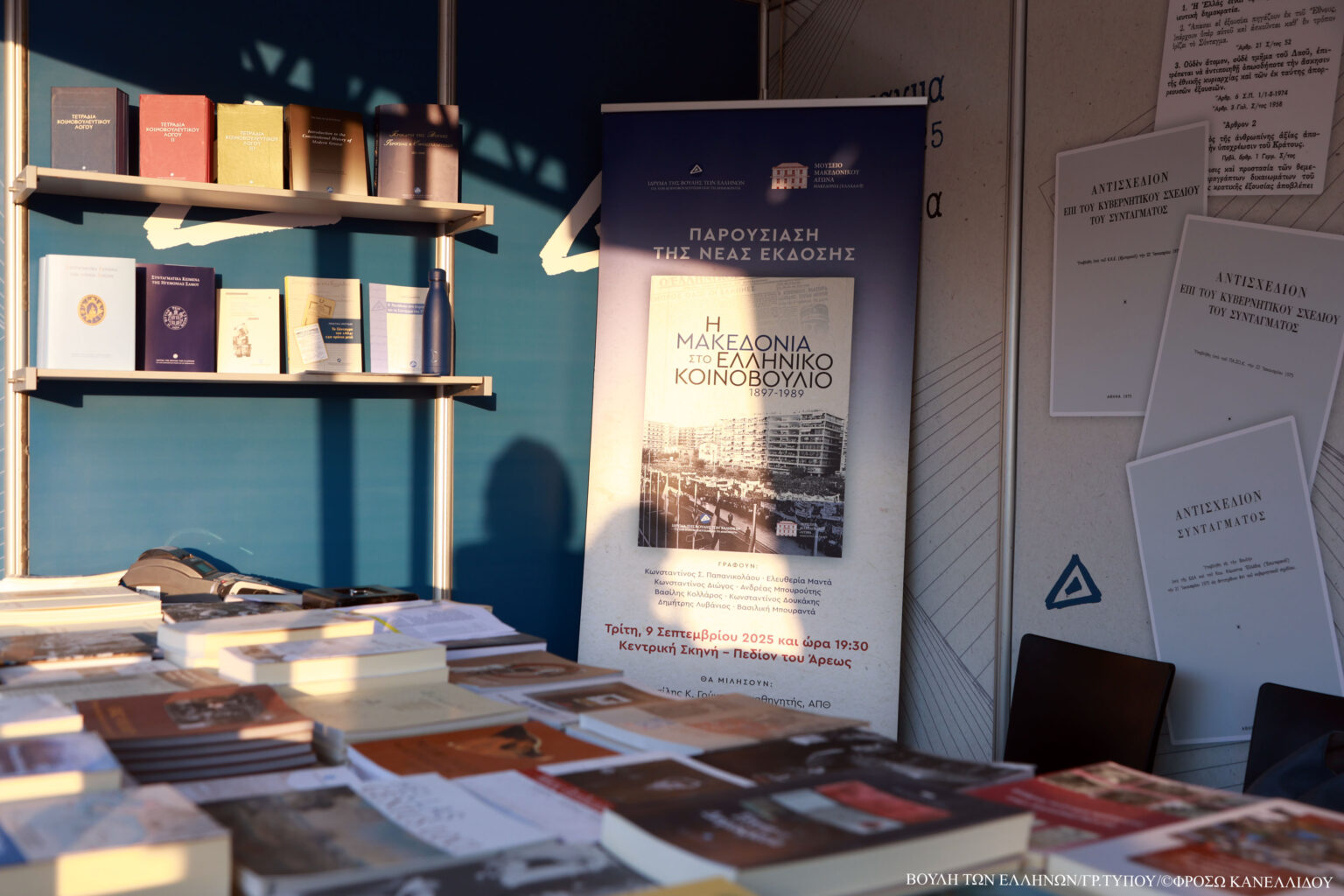
The collective volume Macedonia in the Hellenic Parliament, 1897–1989 (edited by Vasilis K. Gounaris and Ioannis D. Stefanidis), a joint publication of the Hellenic Parliament Foundation and the Foundation of the Museum of the Macedonian Struggle and of the Modern History of Macedonia (IMMA), was presented on Tuesday, September 9, within the framework of the 53rd Book Festival at Pedion tou Areos.
Opening the event, the Speaker of the Hellenic Parliament Nikitas Kaklamanis referred to the importance of Macedonia in shaping the political and social trajectory of Greece, noting that “Macedonia determined the fate of our nation and state on many levels. The Macedonian Question was decisive in shaping the borders of our state and in ensuring the survival of Hellenism in Macedonia.” He went on to refer to the decisive contribution of the region to economic development and Greece’s integration into the Western world, stressing that efforts to develop Macedonia were realized in the post-war period, especially under the leadership of one of its most distinguished sons, Konstantinos Karamanlis. He also pointed out that Macedonia has always been at the heart of parliamentary debates, and that the volume highlights the positions of MPs from the region, accurately reflecting the concerns and demands that occupied Parliament for decades.
The Speaker of the Parliament also emphasized the value of the collaboration between the Hellenic Parliament Foundation and the Museum of the Macedonian Struggle, “a great intellectual institution of Macedonia and Thessaloniki,” as he described it. In closing, he underlined that the Foundation considers it “a fundamental obligation to pay due tribute to Macedonia” and described the publication as “an important contribution to the history of modern Greece and Greek parliamentarianism.”
Next, the director of IMMA Athina Pavlidou, after referring to the fruitful collaboration of the Museum with the Hellenic Parliament Foundation, conveyed greetings from its president Nikolaos K. Margaropoulos, who noted that the work fills an important gap in historical research, and especially in the study of public discourse on Macedonia. He stressed that at IMMA, “as an institution that has undertaken the responsibility of preserving, highlighting and interpreting the modern history of Macedonia, we consider it our duty, through our research center, to contribute to scientific approaches that enhance knowledge and reflection on the past.” Margaropoulos also thanked the contributors to the volume and the Hellenic Parliament Foundation, expressing the hope that this collaboration will continue to the benefit of the common goals of the two institutions.
Vasilis K. Gounaris (professor at Aristotle University of Thessaloniki and co-editor of the volume) began by observing that words spoken in Parliament have a double life: first, at the moment they are spoken, and second, when they become the subject of study. He spoke of his close personal connection, from his first scientific steps, with the Research Center for Macedonian History and Documentation of the Museum of the Macedonian Struggle, where he served as director, describing it as “his first — and indeed… out-of-wedlock — child.” He then referred to the museum’s important scholarly groundwork, its invaluable archival material, and its research projects, which are not limited to the Macedonian Struggle but extend to broader fields such as foreign policy, identities, and collective memory. On this solid basis, he emphasized, the collaboration between the Museum and the Parliament Foundation represented an important step forward.
Historical research, he concluded, is highly illuminating regarding how the image of Macedonia is reproduced and incorporated into parliamentary discourse. What emerges, through parliamentary debates, is the image of a province of historical and geopolitical weight, as well as economic dynamism, yet under constant threat and persistently neglected by the national center. While this image is largely accurate, he concluded, its overuse contributed to the creation of a local ideology characterized by insecurity and a deep-rooted sense of injustice.
Ioannis D. Stefanidis (professor at Aristotle University of Thessaloniki and co-editor of the volume), moving — as he said — within the general framework outlined by Gounaris, focused on certain specific points highlighted by the volume. He emphasized a sense of insecurity as a common thread throughout the period: at the beginning, in 1897, this is seen in the anxiety over how Greece could have a say in the fate of Macedonia, then still an Ottoman Empire province; while by the end, in 1989, it is linked to geopolitical developments in the wider region, especially the Dissolution of Yugoslavia. He also referred to the dividing lines that emerged over the years: ethnic (pro-Greek and non-Greek) at first, then between locals and refugees after Population exchange between Greece and Turkey in 1922, and during the two great internal political splits — the National Schism (Venizelists vs. anti-Venizelists) and later leftists/communists vs. right-wing/anti-communists. A turning point, he said, was 1974, when these deep rifts were overcome; divisions from then on became party-political and no longer had the character of national schisms.
Stefanidis offered an overview of the volume, presenting in detail the contributions it includes, and closed with references to the post-dictatorship Intensive Regional Development Centers created by the government of Konstantinos Karamanlis in the years of Metapolitefsi — a bold attempt at comprehensive decentralization. Evaluating the reasons why this effort did not succeed, he concluded, is extremely useful even today.
The general secretary of the Parliament Foundation, professor Evanthis Hatzivassiliou, began by noting that, following the guidance of the Speaker of the Parliament, the Foundation’s mission is to serve as an institution addressing the whole country. This, he explained, is achieved in two ways: on the one hand through organizing exhibitions, conferences, book presentations, and other events in many regions of Greece; and on the other hand through the content of the issues the Foundation deals with — a perspective also served by this volume.
The volume, he said, by highlighting the significance of Macedonia, covers many different fields through parliamentary debates: the history of the Macedonian Question and of Macedonia (fields that overlap but are not identical), the economic development of the region, and its internal divisions and their bridging. He referred to the two scientific editors of the volume, Gounaris and Stefanidis, praising their exceptional theoretical expertise — which is not stated dogmatically but evident in their work — as well as the importance they place on exhaustive research of sources. The work, he concluded, can become a reference point for the further development of parliamentary history, the history of Macedonia, the history of the Greek Parliament, and political representation more generally, inspiring the production of similar studies — a perspective which the Foundation wishes to promote.
Macedonia in the Hellenic Parliament, 1897–1989
Scientific editors: Vasilis K. Gounaris, Ioannis D. Stefanidis
Hellenic Parliament Foundation – Foundation of the Museum of the Macedonian Struggle and of the Modern History of Macedonia
Athens 2025, 270 pages, €28